
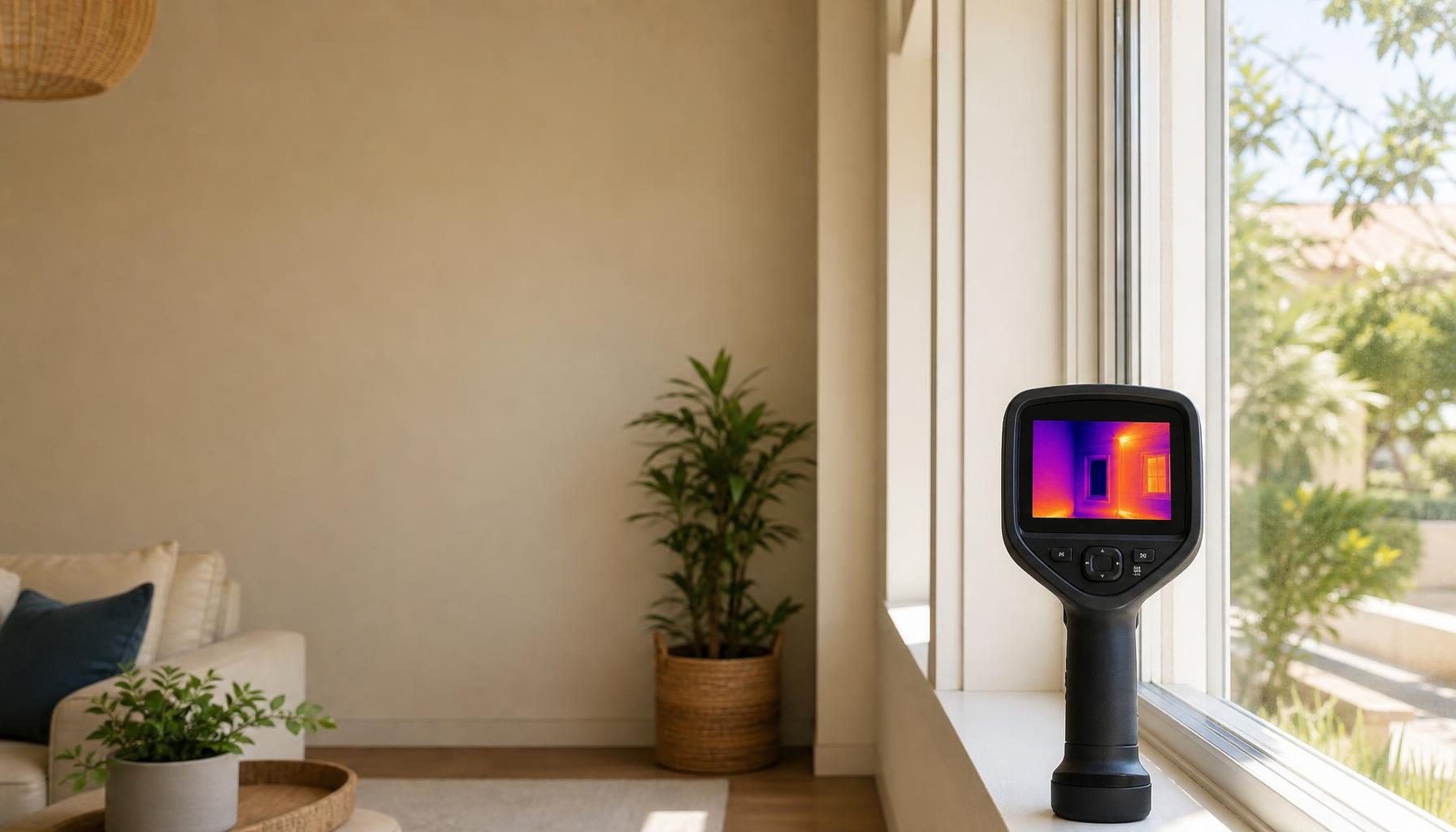
FLIR infrared imaging
Infrared finds what a visual inspection cannot.
Moisture behind finishes, missing insulation, overheating connections and leaking ductwork, seen before they are visible. Infrared is a screening tool: it points the inspection at the right places, and it documents what it finds.
Or call (714) 371-8422The tool
A FLIR camera on every inspection.
Mark is technically trained and certified to perform this inspection service, which few home inspectors in the area are. Infrared thermal imaging or thermography is a state of the art home and building diagnostic tool capable of locating problems within the building envelope quickly and non-destructively.
Ingraffia Home Inspections uses FLIR thermal imaging cameras for all infrared assessments. FLIR is a leader in infrared technology, supplying the United States Government and industry world wide with infrared thermal imaging cameras.
To identify areas of energy waste infrared imaging has quickly become a valued tool in identifying problems related to energy loss, missing insulation, inefficient HVAC systems, radiant heating, water damage on roofs, and much more. A thermal imaging camera identifies patterns of heat loss that are invisible to the naked eye.
Where it applies
Four places heat tells the story.
Detection and Visualization of Air Infiltration and Exfiltration
Adequate air exchange is essential for the occupants' health and safety, but most buildings have a far higher rate of air exchange than is necessary. The root cause is often poor design and/or construction which allows air leakage from the inside of outside of the building, or the opposite. The leakage pathway is often complex and, without thermal imaging, extremely difficult to visualize. This also allows us to quickly identify and note the problem areas.
All new buildings must meet air tightness requirements of the Building Regulations. By reducing air leakage, you will obtain a better comfort in the building. The building can also be heated more efficiently to conserve energy and save money.
Thermal Imaging for Building Diagnostics
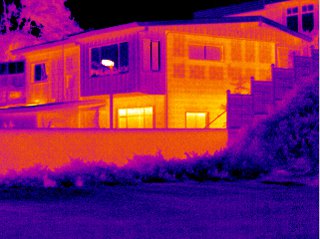
Poor or inadequate insulation, moisture, building envelop leaks, and substandard work are costly to residential and commercial building owners. An infrared camera can help us quickly see where energy efficiency can be improved. The infrared image shows insulation issues on a house facade causing severe energy losses.
Thermal Imaging for HVAC & Plumbing
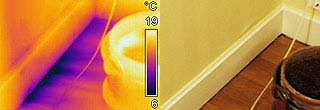
A "whole building" approach is needed to maximize energy efficiency of a building or a home. Indoor environment can be compromised by poor insulation, poorly sealed windows and doors, inadequate or poorly sealed ductwork, plumbing leaks, or other plumbing issues relating to Heating Ventilation and Air Conditioning (HVAC) systems. In this image, an inspection of a ceiling heating system shows several hot spots.
Thermal Imaging for Moisture & Restoration
From start to finish, our inspections can help you simplify your restoration and remediation jobs. An infrared inspection helps you pinpoint water intrusion, find moisture beneath the surface, and document dryness with accuracy and confidence. In this infrared image, the deteriorated areas of the roof are clearly shown at the time of inspection.
Ways to use thermography
Seven things it finds before they are visible.
Infrared cameras are being used in a variety of ways to detect problem areas in residential and commercial buildings.
Moisture intrusion and potential mold in walls and ceilings
IR thermal imaging is much faster, noninvasive, and provides evidentiary-quality, intuitively understandable data having a much higher degree of accuracy and reliability than other moisture detection technologies used to trace the source and scope of water damage, and thus potential mold in buildings. Once the IR camera identifies areas with thermal differences, a moisture meter can be used to confirm that they represent moisture.
Missing or damaged insulation
An IR camera can quickly and non-destructively detect areas of missing, moisture-laden or otherwise damaged insulation in walls, crawlspaces and attics or around doors, windows, electrical outlets and other access plates. All of these problems can increase a building's energy costs by allowing cold air to enter the building and heated air to escape in the winter, and the reverse in the warmer, summer months. IR can also identify poorly or un-insulated pipes, another source of costly heat loss.
Faulty electrical mechanical and HVAC systems and components
Infrared cameras are very effective at detecting overloaded circuits, faulty wiring, and loose electrical connections, which generate heat, and can pose serious fire hazards. IR can detect thin spots in furnace heat exchangers and flues, mechanical problems such as worn, under-lubricated pumps, motors, and bearings in fans, compressors, and furnaces, electrical faults, refrigerant leaks and blockages in HVAC components, another source of costly energy waste.
Leaking roofs
Roof leaks can cause costly damage to a building's contents and discomfort to its inhabitants. An infrared inspection can quickly identify missing or moisture-soaked insulation under a flat roof membrane where the insulation needs replacement, permitting the surgical repair of failed areas rather than the much more costly replacement of the entire roof.
Construction defects
The increased use of EIFS (Exterior Insulation and Finish Systems) and stone, stucco, brick veneers and siding as facades on residential as well as commercial buildings invites the possibility of water intrusion if they are not properly installed. IR can detect or verify moisture infiltration in these weatherproofing 'barrier' systems, usually the result of insufficient detailing such as inadequate or improperly applied flashing or sealants. In addition, IR can monitor and track moisture migration paths within the wall cavity.
Post-fire inspections
After fires, IR can quickly locate remnant hot spots, assuring the fire is completely extinguished and provide invaluable data for insurance companies' Cause and Origin investigations. The clear IR images of normally invisible diagnostic evidence can assist in the planning and execution of the restoration effort and in the settlement process.
Termites
Although considered cold-blooded creatures, termites are hosts to bacteria, which help break down and digest cellulose, the main ingredient of the wood they digest. The digestion process generates heat, and when large numbers of termites in nests congregate, a substantial amount of heat is concentrated in one area. As this heat moves through the walls or floor of a building, an IR camera can detect it on the surface.